


As part of the tentative agreement, the utility agreed to put ‘downward pressure’ on rates, but lower bills from customers are not guaranteed.

Georgia Power’s Plant Bowen in Cartersville is shown. The utility wants to add about 10,000 megawatts of power supplies in just five years, mainly to serve data centers. (Hyosyb Shin/AJC 2015)
Georgia Power and the Public Service Commission’s staff unveiled a deal Wednesday that would allow the utility to add about 10,000 megawatts of power supplies in just five years, an unprecedented expansion that’s mostly to serve data centers.
The agreement, known as a stipulation, is not final. It still must be approved by the five members of the PSC. But in other cases in which stipulations were reached, the commission has stuck closely to the agreement, so the deal is likely a preview of what the PSC will approve.
The deal calls for all 9,885 megawatts of new power plants and other generation resources Georgia Power was seeking to be “certified,” a key step that would allow the company to start construction and paves the way to charge customers down the road. The overall expansion is more than double the combined generating capacity of the four nuclear reactors at Plant Vogtle near Augusta.
Most new electricity supplies the utility wants to build itself or buy from other power plants would rely on burning gas, which produces potent greenhouse gases that are warming the planet. The rest would come from battery storage systems and some solar.
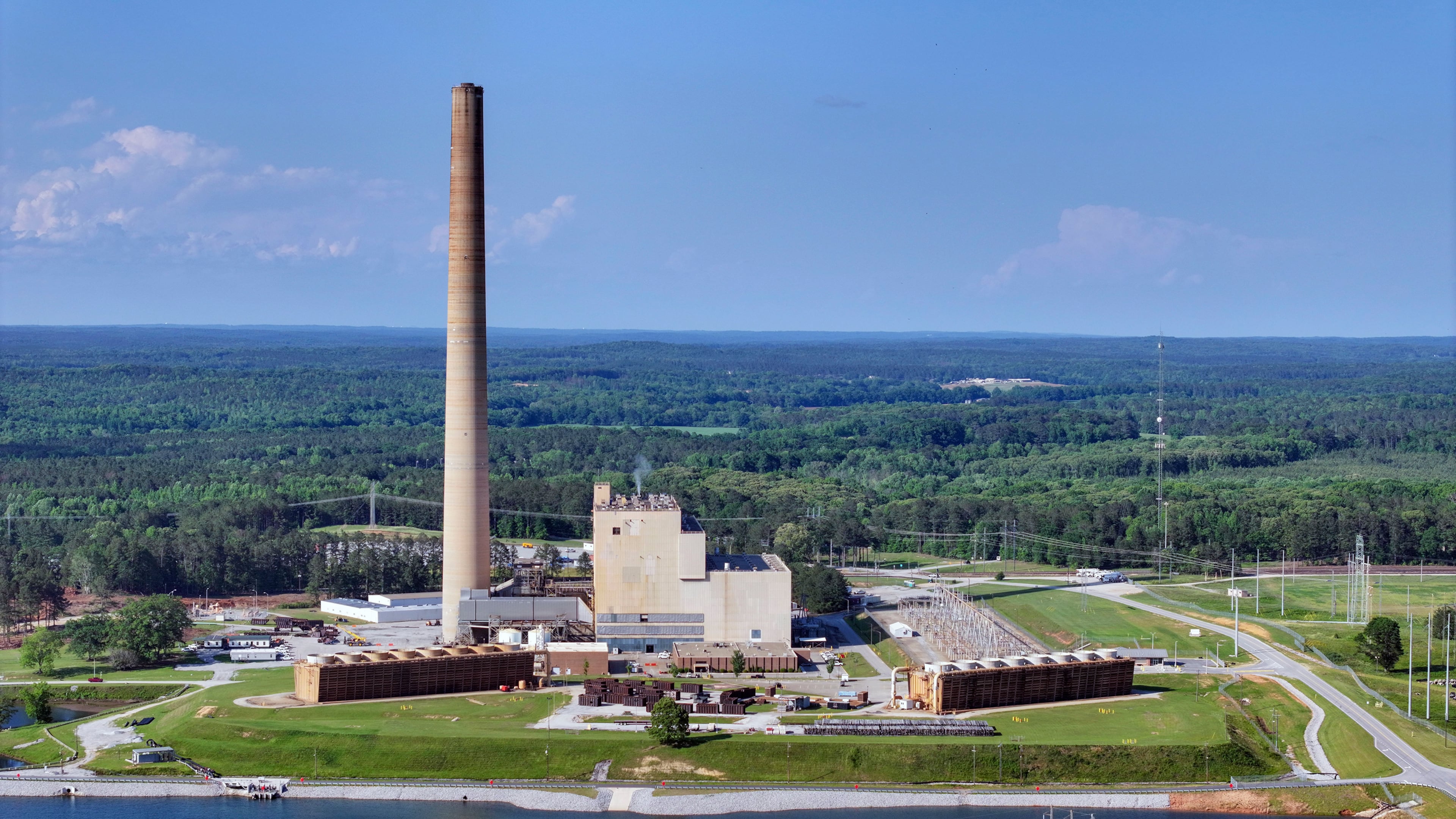
Plant Yates in Newnan has caught the attention of developers who want to build a large data center nearby, covering 4.9 million square feet. (Miguel Martinez/AJC)
Nearly all the new power generation muscle is needed to serve data centers, the energy-intensive computing warehouses springing up across Georgia to serve artificial intelligence and other digital products.
Monopoly utilities like Georgia Power earn profits on investments in new power plants and transmission lines, so the deal, if approved, would likely boost the bottom line of its parent, Southern Company.
In a filing with the federal Securities and Exchange Commission, Georgia Power estimated the new power resources it would be allowed to build would require at least $16 billion in capital investment. That does not include power the company would purchase from third parties or other related costs, so the plan’s ultimate price tag could be significantly higher.
In testimony filed before the hearings, PSC staff had warned residential customers could eventually see monthly bills jump $20 or more if the utility’s full expansion were approved. Staff had previously recommended the commission sign off on only about a third of the new power supplies, at least for now. The rest, they said, were “speculative” and risky investments for customers.
‘Downward pressure’ pledge
Rising power bills have emerged as a potent political issue nationally and in Georgia. Georgia Power customers have seen their monthly electricity bills rise six times in roughly three years because of decisions made by the all-Republican commission.
Democrats flipped two Republican-held PSC seats last month in an election that largely became a referendum on utility bills with Democrats alleging the GOP members were rubber stamps for Georgia Power. Those Democrats, incoming commissioners Peter Hubbard and Alicia Johnson, will be sworn in next month and will not have a say in this deal.
Under the stipulated agreement, Georgia Power has pledged to use extra revenue from data centers to keep other customers’ rates in check.
In return for the endorsement of its fleet expansion, Georgia Power agreed to structure its next rate adjustment — slated to be proposed in 2028 — to put at least $8.50 in “downward pressure” on residential customers’ monthly bills.
It’s far from guaranteed customers’ bills will shrink that much, if at all — a point PSC staff conceded during Wednesday’s hearing. “Downward pressure” is not the same as a rate cut and many residential customers use more electricity each month than the 1,000 kilowatt-hours used to estimate bill impacts.
Any rate increases or decreases resulting from the agreement won’t be felt until 2029.
In a statement, Georgia Power CEO Kim Greene said the agreement will mean “more money stays in your pocket while we power Georgia’s future.”
“Large energy users are paying more so families and small businesses can pay less, and that’s a great result for Georgians,” Greene added.
Environmental and consumer groups have a less rosy view of the deal.
Thomas Farmer, the vice president of advocacy for the Southface Institute, called the proposed deal an “extraordinary ask that will impact our state for decades.”
“This agreement gives Georgia Power everything they’ve asked for with very little in return for regular Georgians,” he added.
‘Closed door’ deal criticized
The deal was announced just 90 minutes before hearings on the company’s plan were set to start Wednesday and was met with surprise at the PSC’s downtown headquarters. The hearings this week are the last chance for parties to argue for and against the deal before the commission votes on Dec. 19.
The hearings themselves, which could last through Friday, got off to a rocky start Wednesday.
As PSC Chairman Jason Shaw tried to kick off the proceedings, he was drowned out by a group of environmental and consumer advocates that stood in front of the dais chanting things like “Power to the people, not Georgia Power.” Several protesters were forced out of the hearing room by police, but a Georgia State Patrol office confirmed none were placed under arrest.
Once the hearing got underway, commissioners continued to get an earful during the public comment period. For more than two hours, a chorus of speakers said they were frustrated by high power bills and worried about the higher temperatures that will result from increased burning of fossil fuels.
Georgia Tech student Kiran Kapileshwari said the stipulated agreement was negotiated “behind closed doors” and blasted it as a “profound breach of public trust.”
PSC spokesman Tom Krause said these agreements are common in PSC cases and called the process “very open and public.”
“It was negotiated in the same manner as stipulations in any legal process,” Krause said.
Kapileshwari and others also criticized the timing of the PSC’s scheduled vote on Georgia Power’s historic expansion. The final vote on Dec. 19 will take place less than two weeks before Hubbard and Johnson take office. Two environmental groups unsuccessfully sought to delay the vote until the New Year.
In a rally Wednesday morning outside the PSC offices, Hubbard said there are cleaner and better alternatives to the gas plants Georgia Power wants to build, and said he did not believe the customer impacts of the company’s plan have been fully vetted.
Hubbard said he had not heard about the deal the utility struck with the PSC staff and learned of it only when asked by reporters.
“I don’t know what’s going on behind closed doors, so I can’t speak to that, but I will be sitting at the table very soon,” Hubbard said. “And if you’re not at the table, then you’re on the menu, and that’s appears to be what happened today.”
A note of disclosure
This coverage is supported by a partnership with Green South Foundation and Journalism Funding Partners. You can learn more and support our climate reporting by donating at AJC.com/donate/climate.

Drew Kann is a reporter at The Atlanta Journal-Constitution covering climate change and environmental issues. His passion is for stories that capture how humans are responding to a changing environment. He is a proud graduate of the University of Georgia and Northwestern University, and prior to joining the AJC, he held various roles at CNN.